Showing posts with label Peter Drucker. Show all posts

Monday, 16 May 2016

78. CAN WE BE TAUGHT?


78. CAN WE BE TAUGHT?


www.connectthethoughts.net


EDUCATION- schooling, is big business in India. It is also good politics. Compulsory schooling, right to education are all political weapons. But the politicians always shoot, keeping the weapons on others' shoulders. 

Education: free and controlled


Education is acquisition of knowledge or information. It may include acquisition of skills required for a profession or career. It may involve cultivation of attitudes and values. It surely involves acquisition of ideas, opinions, beliefs and prejudices. In countries where real freedom is enjoyed, the community decides what to learn, and what to exclude. For instance,in the US, several communities do not agree with Darwin's theory of evolution and it is not taught to pupils before a certain age. In countries like India, where we are free on paper, but education is fully controlled by the govt, the govt decides what shall be taught. Since the govts are run by political parties, it is they who ultimately decide matters. They may form committees of 'experts' to gain respectability, but such committees only include those who are committed to their views.


2004-11-30 04:00:00 PDT Dover, Pa. -- The way they used to teach the origin of the species to high school students in this sleepy town of 1,800 people in southern Pennsylvania, said local school board member Angie Yingling disapprovingly, was that "we come from chimpanzees and apes."

Not anymore.

The school board has ordered that biology teachers at Dover Area High School make students "aware of gaps/problems" in the theory of evolution. Their ninth-grade curriculum now must include the theory of "intelligent design," which posits that life is so complex and elaborate that some greater wisdom has to be behind it.

from: www.sfgate.com
Can this happen in India?


The chief method of formal education is structured instruction, called or rather miscalled, teaching, following a rigidly laid down syllabus and prescribed text books. This is followed up by testing, culminating in the award of a certificate. Unless one goes through the school system, and submits to the  formality of so called teaching, as evidenced by a piece of paper at the end, one is not considered 'educated'. But the question is, can we be taught?

Teaching V learning


If we review our own experience, we find that what we know is not necessarily because we were 'taught' but because we learned. What we know now surely exceeds all that we were supposedly  taught .Those of us who are interested in advancing in knowledge keep learning on our own long after we left school or college. In the process, we realise how much of what we were taught as conventional wisdom is no more than the convenient consensus of the controllers of power. The vast majority study something because they have to pass an exam, and once they take up employment, they start learning the tricks of the trade, while what they studied at school or college fades away from mind and memory. But life is such that we  keep learning through our lives- except the real idiots. May be we learn the wrong or not so desirable things, but we do keep learning, even if it is through some commercial advertisement.The smart ones learn from their mistakes,too!


What we learn through formal schooling is only the foundation. We can stop with it or build on. 
Where we build on, it is often due to the influence of a teacher or mentor or some example, or some inner urge. The real teaching is not instruction in a subject, but the lighting of the spark hidden in each person. It may be academic learning or some other skill. Someone may provide us a meal and remove our hunger now, but it will return. If someone can teach us to cook, and also where and how to find the materials, this is a life long help.

Academic institutions indoctrinate


In the Indian school system, they used to lay emphasis  on learning the basics- reading, writing, grammar, pronunciation,simple arithmetic.. Job skills were learned on the job.In the last 40 years or so, I have seen drastic changes in the scheme. With the shift in focus to sciences, languages, humanities and social sciences are neglected. Language is entirely neglected .The use of English as medium of instruction from lower classes has relegated our rich languages to the rear, stifled self expression and original thinking, while even in English the expression is limited to stock phrases and tutored  ideas. What can poor students do if they won't get marks unless they reproduce what is in the book? To go beyond the book is to court academic disaster. This is especially the case at the high school level,which is perhaps the most formative period in the life of a student.

At least up to the high school level, we can say some basic , useful things are taught, though mixed with much useless stuff. But at the university, the courses are entirely coloured by the hidden agenda pursued by the faculty dons. In most universities today, the leftists ( misleadingly called 'liberals' in the US) have taken over the faculties. It is they who force their agenda on the students, both at course work and research themes and projects. They shout the loudest about freedom, but are the first to stifle and snuff it out once they come to power. It is the leftist view and interpretation of humanities , social sciences and even the hard sciences that hold the 'default' position. Most students cannot break through this wall. Later, such graduates and scholars come to occupy positions in the professions, media and  newspaper and make their view appear the standard. Since they control so much of the academies and the flow of information, the contrary or alternate views hardly get public space. And they get labelled in the leftist jargon. This we see even in India today. In this regard, see the following books:


1. Do As I Say (Not as I Do): Profiles in Liberal Hypocrisy by Peter Schweizer. Doubleday, New York, 2005. 
2.Fools, Frauds and Firebrands: Thinkers of the New Left by Roger Scruton. Bloomsbury, 2015.
In view of this, any one interested in the truth or a balanced view of things will have to look beyond the academies and media.

Stinking economics 


I was introduced to computers and Internet at 70. The first thing I did was to check up the subjects I left at college. Even though I have been in touch all along through books, the range and depth of material available on the subjects  on the Net is mind boggling. But one has to exercise judgement in accepting it.  


Through this I made a basic discovery. Every subject has advanced- except economics! Economists still swear by the shallow doctrines and empty slogans of defunct economists of a by gone age. Or invent pure fictional theories that do not touch our real problems. Our finance ministers and the bureaucrats who dutifully (mis)guide them cannot think beyond 18th century ideas on taxation. They cannot control inflation, except issue threats on traders and imaginary hoarding- which is a result of inflation and scarcity, not its cause. [All the while, thousands of tons of food grains are let to rot in govt godowns for which no one is held accountable. And all the while, govt's own PDS is the main culprit.- yet no minister hangs for it.]  No wonder, humanity continues to suffer from the age old problems: hunger, poverty, unemployment, while the ministers and bureaucrats flourish and prosper- whatever the form of govt.!

[ May be one caveat is in order. There is lot of excellent and original material even in economics, which questions its very basic assumptions and shows them to be not only absurd, but dangerous. But such insights are still not let into the mainstream. ]

Book learning V. manual work: bread labour


Gandhiji used to point out that our youngsters who went to school and learned English were unwilling to do manual work. They always preferred  clerical or other jobs which involved ordering others about, in however small a measure. Come admission time, even the watchman at the school gate asserts his authority. No one can enter or exit any govt dept without tipping the peons and clerks. Of course, no work can be got done without greasing palms. Now, most school children do not perform any  domestic chores at all. Gandhiji's  prescription against this tendency was "Bread labour"- following Tolstoy.


May not men earn their bread by intellectual labour? No. The needs of the body must be supplied by the body.

 Mere mental, that is intellectual labour is for the soul and is its own satisfaction. It should never demand payment. In the ideal state, doctors, lawyers and the like will work solely for the benefit of society, not for self. Obedience to the law of bread labour will bring about a silent revolution in the structure of society. Man's triumph will consist in substituting the struggle for existence by the struggle for mutual service. The law of the brute will be replaced by the law of man.


School: resort of the leisure class? Or privilege seekers?


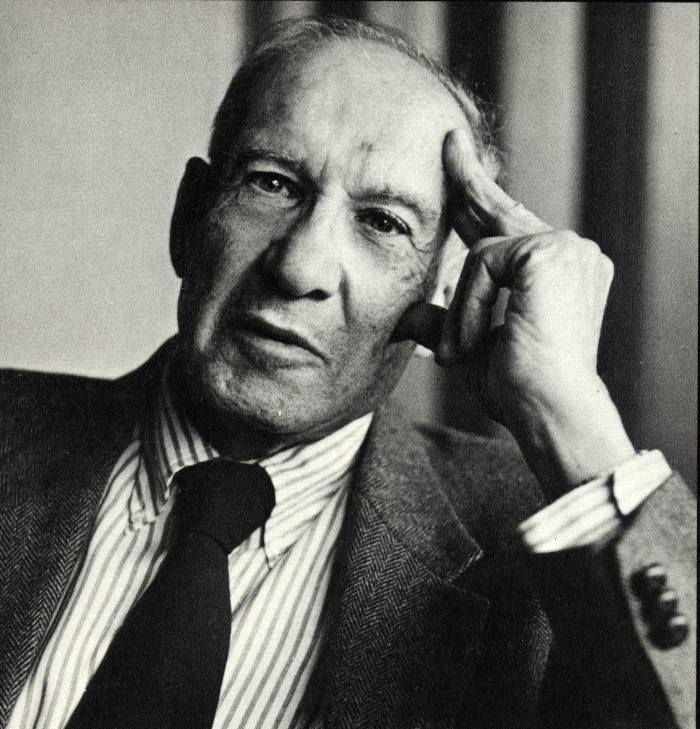
But this is not surprising. As Peter Drucker points out, the very name 'school' is derived from a Greek word which means 'leisure'. The Greeks detested all manual work, including the arts and crafts; they were essential, but were reserved for the slaves. For themselves, it was the school- where it was all academic learning, devoid of any practical work. It was meant to train them as citizens.


painting of a scene in Plato's Academy. In the centre are Plato (left) and Aristotle.


This was the model which spread in the West. In the beginning only the well-to do classes went to 'school' and their numbers were limited. But in the 20th century, schooling has become the fashion and the passion. People are coming out of the academic stream in ever greater numbers, all seeking work which won't soil their hands! Work such as manufacturing is assigned to the Third World- where they not only soil their hands,but pollute their air, land and water!


This is the model which the British introduced in India. But still, till about the 60s, we did all our manual household work and also attended school and college. Since then, with the spread of English medium education, our educated youngsters seek non-manual work, in an urban environment. Computers and IT have facilitated that.


 But can this trend provide jobs for all? Any knowledge industry can absorb only the top, which will be few, and the vast majority will have to slog in less significant and often personally meaningless occupations. It is reported that in India over 50% of the graduates are unemployable. Bureaucracy with its security and retirement benefits- and power with absence of accountability is still  a big attraction. It  is the ideal paradise on earth for unproductive idlers.But its compensation structure unrelated to productivity is a burden on  tax payers. How long will the system bear it?


A modern school in Europe. At the rate computer is used, our children will forget even writing and simple arithmetic. They may even forget their names and remember only the password!
frm: educationstarcorp.com

Continuous, life-long learning

The IT sector clearly demonstrates the point that people cannot be taught, beyond a point. Many newer topics and developments in the field are not taught in the colleges: the faculty is clearly unable to deal with them. [This I know personally.] Everyone has to learn many things on the job, and keep learning. This is one sector where length of service does not count, unless it is accompanied by continuous learning.


Even in the traditional bureaucracy, one's academic learning has only a limited value. How much economics does the finance secretary know? And how much of it does he  apply? How much CAN he apply? And what does that economics teach him, any way? 


As Lord Keynes , the greatest economist of the last century pointed out: 


The theory of economics does not furnish  a body of settled conclusions immediately applicable to policy. It is a method rather than a doctrine, an apparatus of the mind , a technique of thinking which helps its possessor to draw correct conclusions. 

 Where the ministers and their minions lack a mind, what can that apparatus do?


For the lawyer or a physician, every new case is a fresh learning opportunity. But he  usually tries to fit the case to a known formula- which means people in general are not eager to learn. So the calls for refresher courses for the medical profession. 

Information: stuffing V. absorption


The modern idea of education is stuffing the mind with information. The subjects are many, the syllabus is heavy. The semester system makes pupils learn too many things, too fast. And they forget equally fast, past the examination. The result is information overload, not at all digested. This also leaves little time for reflection. 


There is much madness and stupidity in this arrangement of syllabus and subjects. Reading, writing, arithmetic- these are skills universally needed, and mastered up to some level. Beyond this, science (physics, chemistry, biology) and higher mathematics ( algebra,geometry, calculus, trigonometry etc) are neither universally necessary nor universally appealing. But our system is such that these subjects are given undue importance over the essentials. And one who cannot do well in these is adjudged to be backward or dull. 

intelligence expresses in different ways


Anyone who has lived with siblings, cousins etc and parents with several children know by experience that different children are differently endowed and there are really not many dull children.  A true teacher should recognise what the child is good at and encourage that- not harp on what she cannot do, or do well.  Why should a boy be forced to mug up some chemical formula, when he likes to read a poem or story, or paint and draw? It is the distorted scale of the adults' sense of values that is forced on the children. The adults are being idiotic, but the poor children are blamed!


If one is not interested in so called higher maths,is one dull? What nonsense! Have all the mathematicians made the world a better place?
from: theguardian.com 6 November,2009.


There are great teachers who can identify what a student is good at. But for every  one such teacher, we have scores who only blame the children. A friend took his two boys to a teacher of classical music. After some routines, the teacher loudly announced that one of the boys had no voice at all! What great voice do you expect in a boy of 8 or 10? Do you not know that voice breaks around 14 or so? Did the boy want to learn music or become a performing artist? And take some of our great artists- like Madurai Mani Iyer, Madurai Somu. Even today, the voice of some of our top artists does not sound the same on different days, or even with different mics! What  great voice did they have? But did they not become great performers? And even if the boy could not sing, he could learn an instrument later- as many people have done? And even if he did not have a voice, it could have been conveyed in a less offending manner? The boy, till then interested in music, lost all interest. Fortunately, after 5 years, in another place they found a teacher who taught him violin and he learned it well!

Learning from horses? Why not?
Remember Hayagriva?

Monty Roberts, "the man who listens to horses"- who revolutionised the method of training horses, substituting love and understanding for brute force, reveals a moving incident.
In the last year at high  school, the teacher asked the boys to write an essay on their life's ambition- what they wanted to achieve. Monty who had loved and lived with horses from age 2, wrote about his dream to become a big horse trainer, with a huge facility! The teacher considered the ambition unrealistic and awarded an F to the paper, and asked him to resubmit the essay, scaling down his ambition to realistic level. Fortunately, the boy's distress was found out by his mother. She read the paper, and asked him to resubmit it as it was. And Monty added as a note what his mother had said:


  A teacher does not have the right to put a cap on the aspiration of his students, no matter how unreal those aspirations might seem.


As it happened, Monty became a famous and successful trainer, developing his unique method of training based on understanding the language of horses (non-verbal communication) ! He did develop his own big training facility, and shot to world fame after Queen Elizabeth learned about his work and called him to demonstrate his method which the entire Royal family witnessed! 


Front cover of the 1997 edition by Random House.
shown here for purely educational purposes.


Forty years after the school incident, the old teacher himself learned about Monty and visited his horse farm, with a bus load of his Church social group and openly confessed how wrong he had been! He said Monty had been his teacher! But we can see that it is his mother who was the real teacher! How can we say in which form the teacher will come, and what we will learn, and where! A great teacher is one who inspires others to greatness. 

As Mark Twain said: 


Keep away from people who belittle your ambitions. Small people always do that, but the really great make you feel that you too can somehow be great.


Such are the real teachers. But it depends entirely on our capacity to learn, and live up to it! Did not Dattatreya claim in the Bhagavata that he had 24 teachers- 21 other than humans? And none of them taught  through words!

Wednesday, 11 May 2016

76. MAN WITHOUT SOCIETY


76. MAN WITHOUT SOCIETY


12th century Chinese painting by Gu Hongzhong. It shows servants, monks, musicians, guests,hosts  in the same social environment.
Public domain via Wikimedia commons.


ARISTOTLE defined man as a social animal. In his treatise Politics, he said:


“Man is by nature a social animal; an individual who is unsocial naturally and not accidentally is either beneath our notice or more than human. Society is something that precedes the individual. Anyone who either cannot lead the common life or is so self-sufficient as not to need to, and therefore does not partake of society, is either a beast or a god. ”


May be we may refine it a bit. We know that even wild beasts live in company. And even gods are in groups: we have 11 Rudras, 12 Adityas, 8 Vasus, and minimum 2 Aswins. Those who shun society are exalted sadhus or madcaps. But Sadhus too need others to care for them!


Such quotations have to be studied in context. Aristotle did not say that man was totally social. In his Nicomachean Ethics, Aristotle concluded that the good life for man consisted of  philosophical reflection in solitude, and also  in the exercise of social virtues in the company of people.


Aristotle also said that man is a political animal.(or he is an outcaste). In essence, this too stresses man's social or gregarious aspect. For Aristotle, state was a creature of nature and so man was naturally political- he had to belong to the polity, or he would be an outcaste!


Society precedes individual

The really important point that Aristotle made is  that society precedes the individual. Man does not form society, really. He finds himself in a society.  He is born into a society: this is as true of a tribal society as of the so called advanced society that we take ours to be. Man may not like the society he is born in and may attempt to  reform it, and many do; but he cannot avoid society. So far, no one has succeeded in reforming a society, either. But one can learn to rise above the norms or practices of a society, without disturbing it. This is the Hindu idea of Sanyasa. In the West, a dissatisfied person seeks to change society; in India he changes himself! He drops out of society  But it too is very much a social institution. As Tiruvalluvar says, (Kural 41), the householder remains the support of even the Sanyasi.


Society imposes its terms on man.It is daily experienced in linguistic India. If you are a Marathi or Odiya and live in Chennai, you live on its terms: you have already lost your linguistic freedom! You may have colleagues at the work place, or select friends, or company at parties, but you have no society! When we are part of a functioning society, we do not mind its ways. We fall in line.

This is an important feature in India. Our society may appear rigid. But this is on the outside. Our religion does not enforce a single system of worship or theology or philosophy on everyone. One may believe in any god or no god; one may believe anything about god. It is his business; but he has no business to disturb others. All that the society requires is that you conform to its external norms, while holding your own opinion on everything! All our revolutions are in the intellectual, philosophical fields. It was the other way in the West. Vivekananda pointed this out. It is only now that people in the West have the freedom to believe in anything - or no thing! But for that they have had to dump organised religion and rigid theology! 


 Seen thus, society not only precedes man- it protects him too. We have not realised the full impact of this. The modern tendency is to highlight the deviations.They have reformed society so much and so repeatedly, it is now fully deformed!

Old societies


Those of us who are 70+ recall our life in our small towns and villages, where everyone knew everyone else; where everyone was an uncle or aunt! No one was a stranger except a visitor or traveller. Those were the days before electricity, before telephone. The only means of communication was direct  face to face contact. We learned things like how to address elders ; what gestures or tone was appropriate,when; we observed how the elders moved with each other- we observed their friendliness as also their occasional enmity and indifference. We moved with all sorts of people- inevitable in a small place. Taking all together, we felt there was an invisible human wall of protection around us- no matter where we went or what we did, some one would be watching and we would be accountable.


One may say this must have been so constrictive- so suffocating. Come on, just think about it. Now one has a number- mobile number, Aadhar number etc. He is traceable, 24 x7. Then he is watched by CCTV/ hidden cameras whether on the road, in a shopping mall, in the bank, at the ATM. Are people really more free now? At least we were watched by individuals who had some concern for us; today, we are watched by systems which are not human and have no concern for us! In fact they watch us because they think we may all be criminals or extremists! The system cannot deal with normal people!


Social contract ?

Contrast Aristotle's words with the following:


This is the reversal of the Aristotelian idea. Man's freedom is an inner spiritual freedom. Rousseau talked of a return to nature and living a natural life. This can never be formulated or understood. It must remain a vague idea. It is an abstraction.

Communities within community


People of like types tended to live together- community within community. Their dwellings were also their work places. Thus we had a street where tobacco-sellers would live. As you entered the street, you would see rows of cured or treated tobacco stems left to dry in sun- on the raised platform in front of the house, on the road, on the sloping tiled roof, etc. The whole area would be full of that aroma- rather nice, if you liked it! If you entered the weavers' area, you would see the yarn being dyed, the dyed yarn being dried, and the sound of the handloom working. The whole family would be engaged in it. That sound too was nice, with a certain rhythm which was soothing when you got used to it- it had to be experienced! If you had a classmate from these communities, you could go with them to their house and observe them as long as you liked. We had a street for goldsmiths,  for potters,  for bamboo-weavers, which was called in Tamil "Vedakaaran street"! வேதகாரன் தெரு! The Brahmin agraharam too had its own atmosphere, with its sights, sounds and smells!

If one spent time observing the people at their occupations, one tended  to develop respect for the people and their professions- no matter what it was. They were independent artisans- not workers, and each had his work ethic. They all (except  the Brahmins ) had a strong sense of community.


The essence of such social life was the informal intimacy. One might be a big lawyer,but when we had to go to him with some message, he was lawyer uncle so and so! So with the doctor, so with anyone-except the teacher! He was always Sir, never uncle! We could enter any house any time.


And these elders would not keep idle or merely stick to business. After we had conveyed the message or collected the information or completed the work, they would not simply let us go. They would ask what class we were in or what subject we were studying and would start asking questions. The generation gap was not allowed to show its head! And some feedback would reach our elders in due course! We belonged together.


A typical neighbourhood in Aglandjia Nicosia Republic of Cyprus
By AlsosforestCyprus(Own work) CC BY-SA 3.0 Wikimedia  commons.

How many such nighbourhoods still remain in India?

Economic changes destroy society


With the rise of the cult of economic development, search for employment, social mobility, and expansion of towns, the old neighbourhoods have largely disappeared  in India. In the beginning, colonies or neighbourhoods sprang up which were mainly linguistic  ( linguistic/ethnic in the US). They served a variety of useful functions and provided the first real sense of society to people. For instance when a Madrasi bachelor went to Delhi, Bombay or Nagpur on employment, he would immediately find a Madrasi atmosphere in Karol Bagh/R.K.Puram; Matunga; Dhantoli/ Sita Buldi areas in those cities. Even in cities like Chennai, different areas had distinct neighbourhoods. With the economic and social changes all these have changed- it is vulgar commercialism everywhere.


With the rise of communal and linguistic politics, such neighburhoods could become sitting targets. So, people now feel safe in being scattered, and in anonymity!


 Our  towns and cities , where we now live have changed beyond recognition. Independent  houses have given place to huge highrises and commercial places. The new professions have changed norms of social contact: no one speaks to a neighbour freely. Even in one block, no one knows who occupy the other flats. Only some senior citizens move around in such places if they find others like them. People have become insufferably snobbish. The IT boom has given them, at a young age, income many times over the average earning of the others,  and this has spoiled them.It is unbelievable: many youngsters  today earn  per month what their parents used to earn per year, after two decades of service! The income disparity was never greater than it is today. The youngsters do not have a sense of  the value of money- partly also due to uncontrolled and continuous inflation. This reflects in reckless spending. Money has displaced manners.


We now have gated communities- but these are not really neighbourhoods. They are like the social clubs of the privileged- to enforce exclusion. Even within the community, the feeling of belonging is absent. 


The old community feeling we may still find in some old areas of old cities like Old Delhi, some parts of Bangalore or Chennai. The new extensions have so such pretensions. 

Peter Drucker, the pioneer


Almost the first person to study this deeply was Peter Drucker. He noticed that by the 30s, the sense of society or community was gone. He understood it to be due to the changes brought about by technology: the industrial culture was replacing the old commercial culture. But the institutions were lagging behind. 


Man works in bureaucracies- whether industrial, private business (corporates) or govt.With that he not only loses his freedom, he also loses his sense of community/society. He works with many others like him in a closed atmosphere , but it does not breed a feeling of society.


Drucker proposed that the big organization had become the new institution of society, in addition to the old businesses and the govt. But it had not understood the sources of its legitimacy and its responsibility to society. [ It is this insight that gave Drucker the impetus to articulate his management theory which in essence was that the new organization/ management must provide not only employment ,but confer dignity, value and a feeling of community on the workers.] This is the theme he developed in the first two books he ever wrote: The End of Economic Man, (1939)  and  'The Future of Industrial Man'  (1942)The blue collar workers of those days have become the knowledge workers of today, but the problem remains as valid. Thus for Drucker, management is not a matter of techniques, but the very art of creating a society of free citizens.


The bonds which created society in the past were not purely or even mainly economic. Today, people know no other relationship. The old social  connections and celebrations have become occasions for commercial exploitation.


Seoul Cyworld control room. Public domain via Wikimedia.
Do such technologies promote community?


The core of a society is always a transcendental value. It may not be clearly stated, but is shared in practice. In the Western societies before the Second World War, these could be easily identified as their religious belief ( monotheism ), moral dimension ( that each one is individually accountable to the Creator  or some Power after death- in afterlife), and a dependence on natural law/justice. The two world wars (fought mainly among Christian nations) completely shattered the religious faith of the West. They sought salvation in secular paradise- Fascism, Nazism, Communism.


[ For a fascinating account of these ideas, please see: "Peter Drucker: Shaping The Managerial Mind " by John E.Flaherty, John Wiley&Sons, 1999, chapter 4]


These isms destroyed the autonomous/voluntary association of people like churches and local communities, and made everyone directly dependent on the state. Churches were unable to realise and adapt to the changes brought about by technology. Societies were gone. That the communities still function at all is due to remnants of old religious values, however distorted. as David Cameron, the British Prime Minister recently reminded his people. Abstract secular ideals have not provided practical guidance in real life.


Society and its demise in India


In India too we can see the parallel, though with  a time gap. Our concept of Dharma- which even the beggar understands- doubles up for both morality and natural justice. Our religion gave us a practical formula of the four aims of life: dharma, artha, kama and moksha. Rebirth- not just afterlife- was a certainty and its quality depended upon how we lived now. This held largely till Independence: Gandhi was still invoking his vision of Ram Rajya!


With Independence came Nehru, his socialism  with its promise of secular salvation, dumping of religion, especially Hinduism, and  a bulging bureaucracy which became a super power. Politicians and bureaucrats between themselves have destroyed all forms of voluntary social effort and asserted their total dominance. With the rise of communal politics, all bases of social cohesion have been destroyed. People are pathetically dependent on govt- from essential supplies to education. In most cases their freedom for voluntary enterprise is subject in practice to heavy govt restriction and arbitrary bureaucratic action. : eg a private school cannot even have its own way in admitting students or choosing the languages it will teach! 


Our brothers and sisters from North East protesting in Delhi.
www.dw.com


Consider  an average educated Indian. His secular education has deprived him of active religious identity. His joint family has disintegrated. He is probably working in a different state, where he is an outsider. He has company in the workplace but that is during working hours. To which society does he belong? 


In this respect, the Muslims and Christians in India do still have their sense of community. Above all they have the privilege of Constitutional protection of all their ways. Is it not odd that the so called Secular Constitution protects the Muslim and Christian by religion, and discriminates against Hindus? 


Political parties do give a sense of society to their own active members. But this is obtained by preaching hatred against 'others'- as the Shiv Sena, DMK and others did. Most political parties in India are based on interests of specific communities and are no more than caste outfits. Now they combine linguistic fanaticism with it. By their very proliferation, they have destroyed the roots of common Indian social life. Even small villages have lost their social soul.


BANGALORE:  An engineering student from the northeastern state of Manipur was attacked in Bangalore last night by men who allegedly demanded that he "speak in the Kannada language or get out". "They said you are eating Karnataka food, living in Karnataka. If you don't speak Kannada please get out. We ignored them, but they took it as an insult. They picked up stones and attacked us and I got injured," Michael told NDTV, showing a bandaged head and blood-splattered clothes.

from: www,ndtv.com  16 Octber, 2014.

Friday, 6 May 2016

74. COUNTRY AND NATION


74. COUNTRY AND NATION


Nation states of Europe!


Country and Nation- do these words mean the same? Not at all, though in practice we may use them as interchangeable. These are problems for us who have to use a foreign language, without understanding how the words originated. In our Indian  languages we say DESAM or DESH/ Rashtra. Tamil purists will say Naadu. நாடு (The last 'u' is only half pronounced!). National Tamil poet Subramanya Bharati used both, as in பாரத தேசமென்று பெயர் சொல்லுவோம், பாரத நாடு பழம் பெரும் நாடு, etc.

Making of a nation


Political pundits make fine distinctions between the two expressions. For them, country is more of a natural, geographical designation, distinguished from others. Nation on the contrary is a more artificial, contrived arrangement; people even say it is an abstraction, a myth. When inhabitants of a place share some values, habits etc in common, in spite of differences in other areas, we have a nation. It often has a marked political significance, based on civic ideas.

In the olden days countries were part of huge empires which contained many ethnic, linguistic and religious groups. We thus had the Austrian empire, the Kingdom of France, kingdom of Hungary, the Ottoman empire, the Russian empire, etc. In the past, we had the Roman empire which was a multi-ethnic, multi linguistic and multi religious outfit, where every one could pursue their own affairs provided they honoured the State and its conventions. This was disturbed by the Christians who persecuted people of the older religions. It was again the Christian Europe which practised ethnic intolerance as under Nazism and Fascism. The idea of nation state is usually traced to the second half of the 17th century. Scotland and England formally united in 1707 to form Great Britain.  It is thus fairly recent in history. The Ottoman empire which had existed since 1299 disintegrated in 1922. The middle east since then has been in crisis.


Arab flag being raised during the revolt in 1916-18.


All modern nations are called nation-states. Their unity is based on some political arrangement. Thus the USSR was made into a nation by brutal force and suppression. With the fall of the Soviet Union, it has broken up into 15 countries! But there are internal conflicts in all of them so that we can't really say they have become nations. There is nothing that unites the people  of these countries as a whole.


From: wikimedia commons

Post-Soviet states (alphabetical order)


Historically, no country has been the sole bastion of a pure race or ethnic or language group.[ Indonesia, a group of many islands, has 300 ethnic groups and 365 languages!] Some one language might have dominated, but that group did not suppress or eliminate all others. Even that one language was not uniform- it had many strands. I had four Englishmen as teachers in college; they came from different parts of England , a small country; but they spoke in distinct ways, though two of them were Oxonians! It was a pleasure to interact with them! The tendency to eliminate or suppress others is a characteristic of modern dictatorships, like those of Stalin. 

Rising Hindi Imperialism

In India too, we find that under the spreading Hindi imperialism, the various dialects of the North, each rich in its own way, are simply called Hindi, so that they want to show that Hindi is the language of the majority in India!  Goswami Tulasidas wrote his Ram Charit Manas in Awadhi, not what is called Hindi! Listen to it as recited by people who speak Awadhi, and you will know how beautiful and different it is from the so called Hindi. Imperialism has a tendency to suppress others. In this all imperialisms are alike.

See the richness of languages in one state, Bihar alone below!


This diversity and richness is killed by the official Hindi imperialistic juggernaut. As a journalist Deepak Parvatiyar says:


 “It’s not just the usage of Hindi but the new computer language is killing the regional dialects. Besides, as was the case of Magadhi (Magadhi was legally absorbed under the subordinate label of Hindi in the 1961 Census), such state and national politics are creating conditions for language endangerments.”


Nitin Chandra, a Bhojpuri film-maker recently wrote a letter to Radio Mirchi (Patna) chastising them for the fact that in other states they play the regional songs in the local language and asking them to play Bhojpuri and Maithili songs too.Tejakar, on the other hand blames modern education, “Today’s children find using English and/or Hindi to be a symbol of modernity. Schools also ask the parents to talk to the children in English or Hindi rather than the mother tongue. The children are not aware and at the same time discouraged to use these languages.”


from: hillpost.in/2012.

I have no hesitation in proclaiming aloud: Down with Hindi Imperialism. 
All Indian languages/dialects are sacred and should be preserved.


Usually, only dictators attempt to enforce strict uniformity. People in the South may think that the whole of North India speaks so called Hindi language. It is not so. They speak distinct languages which are grouped under Hindi for political reasons. In this sense,even Tamil and Malayalam may be grouped together!


The ethnic and linguistic groups in China-1983. Yet, we think of China as a monolith!

India is Unique


India is a unique example of a country which has been one geographically, culturally and lived as a civilization, in spite of having numerous language and ethnic groups. India had a unity which is not amenable to the straight jacket of 'either ,or' western categories, and their fanciful muck-racking theories. Our concept of nation was not political. No doubt we too dreamt of a Chakravarti - one who controlled the whole land. But our idea of nation did not depend on such notions. It was apolitical. Few western writers and their blind Indian followers are able to understand this.


Front cover shown here for educational purpose.


One western writer who seems to have understood this is Diana Eck.(in spite of her other aberrations and typical western prejudices) In her book, "India: A Sacred Geography" she writes:


For many of the diverse people who might be loosely called Hindu, the unity of India is not simply that of a nation-state, but that of geographical belonging, enacted in multiple ways. Hindu pilgrims measure the span of India with their feet...


........a particular idea of India that is shaped  not by the modern notion of a nation-state, but by the extensive and intricate interrelation of geography and mythology.


The fact that the people of ancient India...gave a single name to the whole of this diverse subcontinent is itself noteworthy. The name is Bharata, or Bharat....THIS IS AN INDIGENOUS NAME.


India, like Japan, China and Greece, links its modern identity with an ancient and continuous civilization.


In the past three centuries, India has been seen by traders as a source of riches, by rulers as a part of empire, by missionaries as a mission field for winning souls { ie, conversion}, by romantics and seekers as the sour

ce of something missing in the heart and soul of the West.


The resistance to ideas of India's unity is embedded in colonial thought and often in postcolonial thinking as well. Even the many books that address the idea of India in recent times seem to acquiesce to largely Western constructs. 


What are some of the ways in which India has seen itself? Political analyses do not touch this question. Postcolonial studies do not reach very deeply into the premodern subsoil of India to inquire whether  there have been alternative ways of imagining the complex collectivity of India in a distinctly Indian Idiom.

[From: India- A Sacred Geography by Diana Eck. Harmony Books, New York, 2012]


India is sacred

India is unique in this respect. For Hindus, India has been a sacred land,  Shakti, Mother, It is not a piece of earth. The motherland is even higher than heaven. 


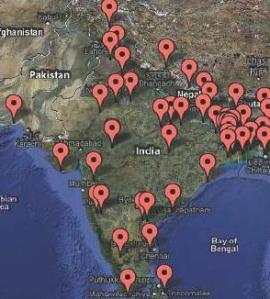
Map showing the shakti peetas of India! The whole country is covered!


Lord Rama says in the Ramayana:


"Janani Janma-bhoomi-scha Swargadapi Gariyasi" (Devanagari: जननी जन्मभूमिश्च स्वर्गादपि गरीयसी, IAST: jananī janmabhūmiśca svargādapi garīyasī) is a Sanskrit shloka uttered by Lord Rama in the Hindu epic Ramayana. It is also the national motto of Nepal. It means one's mother (janani) and motherland (janmabhoomi) are dearer to him/her than heaven (swarga)


The national emblem of Nepal, with its motto! Till the Maoist takeover,, it was a Hindu country!

There are nearly 100 crore Hindus in the world. But today they do not have a mother land! This is the Constitution that free India has given itself! Shame on the Hindus! Double shame on the Hindus! 


This is so far removed from any Western idea of nation and nationhood. Brain washed Indians who get their political ideas from Western writers do not understand this. 


How did India achieve this? This is the genius of India. Superficial observers, both Western and Indian, call this unity in diversity. This is bullshit. This is the diverse expression of Unity which is divine. It is not a convenient political arrangement, or some clever concoction. If one walks through the land of India, its length and breadth, one will realise this. Every part of India has this feeling. 


Evidence from ancient Tamil literature


For instance the ancient Tamils occupying the extreme South were fully aware of this, no less than the others. In a poem in Puranaanooru, a poet sings, while praising a Chera king:

தென் குமரி, வடபெருங்கல்
குணகுட கடலா எல்லை
குன்று மலை காடு நாடு
ஒன்று பட்டு வழிமொழியக்
கொடிது கடிந்து கோல் திருத்திப்
படுவது உண்டு பகல் ஆற்றி
இனிது உருண்ட சுடர் நேமி
முழுது ஆண்டோர் வழி காவல!


The poet is praising the Chera king Irumporai. He says that this king comes in an ancient, rich tradition. What is that?


This country has Kanyakumari in the South and the great Himalayas in the North. There are the two oceans in East and West. Within this, it has mountains, hills, forests, lands divided into units.. This united land was ruled by the kings under their single command. Their rule put an end to all  evils. It was righteous, with the king collecting as revenue one-sixth of the produce, as laid down. The kings did not swerve from justice. O King of the Cheras, , you have come in the line of such great kings!

This was sung by a Tamil poet 2500 years ago! There are many such passages.The Tamils were not only aware of the national boundaries,they were fully integrated into that structure, as when we find a Chera king feeding the armies of both sides during the Mahabharata war.( Puram, 2). And there were Tamil kings who were feared by the rulers of the Northern parts. (Puram 31) Yet our present day Dravidian advocates pretend as if such poems do not exist, as if Tamilians have been aloof, separate, special!


The ancient Tamil-speaking area was divided into 3 main kingdoms and many subdivisions. The existing literature of at least 1500 years speaks of continuous warfare among the Tamils- each king fighting with the others for glory! This and the accompanying mass destruction of land and people, which are rather graphically described, are praised as bravery! Such was their chauvinism! 

Colonial distortion

We have been taught by the colonial masters that they made India one. In one sense it is true: they did not recognise the fundamental unity that already existed and spoke of the creation of a nation state in the modern sense. That was made possible because the Muslims who were aliens had not identified themselves with this land and its ethos. Nor did the Christian missionaries or their converts accept this. The Muslims think of the land of the prophet; the Christians dream of heaven ! Only Hindus say their very birthplace is higher than heaven! So long as the Muslims and Christians do not accept this idea, they will remain alien- ie un-Indian in spirit. A common citizenship may keep them united,but not for long, since their real agenda is different.

The USA: unique modern phenomenon


The United States of America provides a marvellous contrast. The Anglo-Saxons occupied a vast continent , which was in pristine condition . The Native Indians had respected the land, and all natural systems,  lived on and off it but did not exploit or rape it as the Westerners did. But soon, people poured in from all over the world: all ethnic, language and religious groups. Out of this emerged the United States. How did they do it? 


The best explanation I have read- the real secret- comes from Peter Drucker who is primarily regarded as a Management philosopher, but who is a much greater personality , as we will understand when we read his works as a whole. 


From the Peter Drucker archives.


He says:


All along it has been good American political manners to talk dollars and cents when we really mean political decisions.


.....the great themes of American history have all along been moral and constitutional: slavery, the industrial versus the agrarian society, and federalism in the nineteenth century; racial equality, the role and function of the central government and America's place in an international society in this century.


In our American experience, however, economics is the conventional shorthand and the lingua franca for issues and decisions which are not economic, but political and moral.


.....they saw in economic conflict their means to prevent the more dangerous ideological conflict....the economic conflict was the one clash within the body politic that could be managed.


If economic interests had not been available as the political organizer, it would have been necessary to impose the most rigid authority  on the population or else pluralism would have organized itself  against the nation and its unity- with every imported tradition of religion and culture, every imported political value and belief, the focus of an ideology alien, if not hostile, to American nationhood.


The convention of economic interests has not only tended to prevent ideological issues from arising. It has forced the American political system into a nonpartisan approach to noneconomic problems.


This is fantastic analysis. America became a nation by making people focus on the economic issues, so that the other , deeper influences which tended to divide people were pushed out of consciousness, or at least frenzied public discourse.. America emerged as a pluralistic society where the great political issues assumed an economic form! The "American dream" united the people ! The American genius discovered that ideological conflicts could not be bridged; but conflicts could be mobilised and managed by giving them an economic form! However, Drucker felt that this kind of solution might not hold in the future.


[See:Men, Ideas and Politics, by Peter Drucker, Harper Collins, 1971. The above excerpts are taken from chapter 13.]


The United States is the only example in modern times of a new Nation emerging out of diverse elements.  In Latin America, in the Middle East, in Africa, and in the nations which broke away from the USSR, we see how the attempt at creating a nation is not succeeding.


But in a sense the US was lucky in the kind of immigrants it got! Those who came were heterogeneous but they were not politically active. And most of them were not even well to do. Above all, they came mainly from Europe, which had had a history,however chequered. They were absorbed into the great economic experiment, as America was expanding. The American spirit did not believe in any constraints, as old Europe did. The Americans had immense self-belief. They could absorb the immigrants and weld them into a nation within a few decades.


Problems in modern Europe:
Nations upset by Islamic influx


We witness a different spectacle now in Europe. After the second World War, many immigrants entered Europe. They were mostly Muslims of different ethnicities. They too were not well to do. They were mainly oppressed in their own lands, and entered Europe as refugees,seeking fresh pastures. They entered a better administered, economically superior area. But in country after country, they have refused to weld into the mainstream smoothly. They defy local laws and conventions, even while enjoying the fruits of stable civil society and better  economy!


During the freedom struggle in India, separatist Muslims advocated a 'Two nation' theory- that Hindus and Muslims are distinct in so many ways that they can never live together in peace! Islam is not only a religion, it is a political arrangement. When Muslims conquer a land, the only choice given to the native people is: either convert or get killed!. This is a fact of history, proven in nation after nation conquered by the Muslims. Gandhi failed to understand this. To day we see all over the world that wherever Muslims are present in sizable numbers, there is conflict. And every Muslim country is also torn by internal strife! Islam cannot build nationhood! 


Europe has a very severe Muslim problem, how they deal with it will likely determine it’s collective future.

For many years now, the Muslim population in England has been swelling and expanding. As they do in all countries where they have a large number, Muslims there are demanding that England follow Sharia Law. Incidents of Islamic terror attacks in England have skyrocketed, English politicians have already started to give concessions in the pathetic hope of appeasement. The spirit of Neville Chamberlain is a hard one to get past, apparently. Things have gotten so bad there, that patriot groups like Britain First have been formed to do what the English Parliament refuses to do. England is in a battle for it’s very existence, and they refuse to recognize it. In Germany, a group called PEGIDA is sounding the alarm against the creeping Sharia that has begun to bloom there.

[Incidentally, Lutz Bachmann, the co-founder of PEGIDA was fined by a German court two days ago for spreading hatred against refugees in his Facebook posts! This is curious indeed: the courts can do nothing against refugees demanding Sharia, but they can fine people for writing against it! However, in this instance, Bachmann had called the refugees 'scum'. and 'cattle'.]


Muslims, unlike any other group of people, never seek to simply quietly assimilate into the lands in which they travel. They build their numbers, and as soon as they do, seek to exert their will over their host country. I cannot think of any other group of people who do that. There are millions of Jews living in America, I have yet to see a rally or protest where they demand anything. My grandfather, an immigrant from Ireland, came here in 1923. The Irish arrived by the millions and helped to build this nation to what it is today. When did the Irish demand anything other than fair treatment?
Europe has a very serious Muslim problem, and it’s not going away any time soon. Expect many more to be slaughtered to the satanic taunts of Allahu Akbar! as the blood runs in the streets.
To our brothers and sisters in France, all of America mourns with you. Fight for your nation, or expect to lose control of it.


The above is taken from:www.nowtheendbegins,com . This was written after the Paris killings.

The Muslim problem is not terrorism alone

Many people naively think that such attacks are the works of terrorists and we should distinguish terrorism from peaceful Islam. This is a view held by people who do not know or admit the historical record of Muslim expansion. Muslims cannot live peacefully with any  other group for long. It is because their religion, as interpreted by their own authorities, demands of them to assert their separateness and control.
Mahatma Gandhi sincerely believed that Muslims could be pleased by some means. He did not realise that Muslims did not believe in nationalism.  The secular European nations and even the US is making the same mistake now! Those who do not read history are fated to repeat it!

In a way, this is the way of Providence. It was Britain which facilitated the creation of Pakistan. It is  the West which propped up Pakistan against India, with military and economic aid. They have been preaching to us, forgetting that India has faced Islam for a thousand years. One 9/11 has unhinged the US. Let us see how they face Islam for a thousand years- if they last that long.


This is what refugees from Syria and Iraq demand in Europe!
from:www.teapartytribune.com.

It is not easy to make a nation
I write this only to point out that nationality is a concept overarching all other narrow loyalties. Where a group asserts its separate identity and refuses to subordinate it to larger identities and merge with the other groups, nations cannot emerge. No Muslim accepts any other ideology as being above his religion. In practice, every non-Muslim country where Muslims are present in large numbers is a two- nation! They are so many Pakistans in the making!

There is no doubt that there are many sober elements among Muslims. But they are powerless against their organisation.Which political/social scholar in the Western tradition from the Islamic fold will dare to criticise the Sharia- in the same way as many Christians criticise their theology?


This is something the average Indian does not understand. Colonial rule and education has conditioned him to view everything from a Western perspective, to adopt Western standard as the one true mark of modernity. The Indian seeks that label. The Muslim is taught to regard his faith as unique, as the sole truth and as such, superior to all others. How will he agree to compromise?

 The problem of the West is that it depends on Arab oil and cannot afford to be be seen as  offending  the Muslim! Here, economic interest is cutting at the roots of nationality! This is the reverse of the American experiment!


Nations are not created in a day. The US experience is exceptional. It cannot work today with Islam. India too is facing this problem, even after the creation of Pakistan. But in the name of secularism, we are refusing to see it.

The ancient foundations of Indian unity have been shaken and uprooted by the invaders. What remained has been undone by our secular government.  They have tried a mainly political route to forging a fresh nationality, but it has not worked so far mainly because of Muslim resistance ( eg. common civil code, national anthem, national song ). India is consequently now in a limbo.