Showing posts with label Tholkappiar. Show all posts

Monday, 26 October 2015

16.AADHI MOOLAM- THE FIRST CAUSE


WITH  THE  GREAT


Scene depicting Gajendra Moksham. Deogarh temple, UP
By Bob King.[CC BY 2.0 creativecommons via Wikimedia commons]

16.  AADHI  MOOLAM!
THE FIRST CAUSE வாழ்முதலாகிய பொருளே


Gajendra Moksham is an episode that gladdens the hearts of all devotees. In the olden days, children used to learn about it in musical discourses. Now, our children only learn 'baa baa black sheep'!


That Lord Vishnu came to  the rescue of an elephant is as much a tribute to the kindness of Bhagavan, as a celebration of the fact that devotion practised in a lifetime never goes waste.This is what the Gita assures us.


 Na mae bhakta pranasyati  9.31
My devotee is never destroyed.

Paartha naiveha naamutra
 vinaashasthasya vidyatae
Na hi kalyanakrut kaschid 
durgatim thaatha gachchadi.     6.40


O Partha! One who strives after spiritual advance never comes to grief. There is destruction for him neither here (in this world) nor in the hereafter.

Poorvaabhyaasena thenaiva
 hriyatae hyavashoapi sa:          6.44

By that previous practice alone, he is carried forward in spite of himself (in the next birth- mentioned in 6.41,42.)


Tyagaraja Swami celebrates this event in his kriti 'Ksheera sagara sayana':

Vaarana raajuni brovanu vaegame
vachchinathi vinnaanura.....Rama.

O Rama! I am aware how fast you came to rescue the king of the elephants.

In the kriti 'Mari mari ninne', he again sings:

Kari mora vini saraguna chana neeku
kaarana maemi sarvaantaryami!

O the One pervading everything! What is the reason you ran fast , hearing the pleading of a mere elephant?

So here Tyagaraja hints that there must have been a reason why Bhagavan ran so fast to rescue the elephant.


Pahari miniature painting. 18th century.
indianminiaturepaintings.blogspot.com.


This episode is covered in Skanda 8 of Srimad Bhagavatam, chapters 2-4. It is revealed there that Gajendra was the Pandya king Indradymnan  in a previous birth: Raaja Paandyo Dravida saththama:. He was a great devotee of Bhagavan Vishnu, observing all the austerities (Vishnu vrata paraayana:), but was cursed by Agastya to be born an elephant. The crocodile was a gandharva in a previous birth, cursed by Rishi Devala. Both had their relief at the hands of Bhagavan.


We have heard that Gajendra called out "Oh,Aadhi Moolam". His actual prayer is very long, very learned, full of philosophical niceties! Bhagavatam says (chap.2, slokas 32 &33; chap 3,sloka 1) that Gajendra determined with its buddhi that its affliction was due to fate, that it could not come out of it by its own efforts. It focused its mind, and recalled the prayers it had said in the previous birth and started reciting them.


Aevam vyavasitho buddhya
 samaadhaaya mano hrudi:
Jajaapa paramam jaapya
 praag janma anusikshitam  3.1

So we see here the truth of Gita statement that what is done in one birth is never lost.


aberdeentemple.org.uk
site since suspended.

Our delight Kambar sings about this:

போதகம் ஒன்று கன்றி இடங்கர்மாப் பொருத போரின்
ஆதியெம் பரமே யான் உன்  அபயம் என்று அழைத்த அன்னாள்
வேதமும் முடிவு காணா மெய்ப்பொருள்  வெளி வந்தெய்தி
மா துயர் துடைத்த வார்த்தை மறப்பரோ  மறப்பிலாதார்.

our master Arunagiri sings about it with great exuberance in several hymns.

இசையுற வேயன் றசைவற வூதும் 
   எழிலறி வேழம்                                    எனையாளென்
றிடர் கொடு மூலந் தொடர்வுடனோதும்
  இடம் இமையாமுன்                              வருமாயன்.

(நசையொடு தோலும்)


ஆனைமடு வாயிலன்று மூலமென ஓலமென்ற
ஆதிமுதல் நாரணன் 

(சால நெடுனாள் மடந்தை)


மலர்த்தே னோடையி லோர்மா வானதை
             பிடித்தே நீள்கர வாதா    டாழியை
மனத்தா லேவிய    மாமால்

((அனுத்தே னோர்மொழி)


மதசிகரி  கதறிமுது  முதலைகவர்  தரனெடிய
மடுநடுவில் வெருவியொரு விசைஆதி  மூலமென
வருகருணை  வரதன்

(சீர் பாத வகுப்பு )


Kambar, and following him Arunagiri, both state that Gajendra called out to Bhagavan as Aadhi moolam. And Arunagiri says that it called only once (oru visai). And Bhagavan acted with great compassion (varu karunai varadan, manaththaaleviya). And he came in the twinkling of an eye (imaiyaamun) And the one who came is the First Cause- Narayanan (aadhi mudhal Naaranan). The elephant surrendered completely, giving up all its efforts (yenai yaalendrothum, volam) [This is what Draupadi too did in the end]


From: The Brooklyn Museum.


This incident has several lessons for us. While God is compassionate, we have to seek it by appropriate sadhana. Otherwise, it amounts to saying that God is indiscriminate: if he rewards those who do sadhana, and those who do not, then why should anyone do any sadhana? Gajendra had done it in the previous birth. Thus the efforts made in one birth do surely benefit (affect) us in another- they never go in vain.


There is another interesting aspect. It is generally held that in the process of evolution, human birth is the last. One exists as stone, plant, animal, etc before being born as a human being. Can a man take an animal  birth again? (Well, there are many who are animal like even in human form!) This episode shows that it is quite possible- reverse engineering,perhaps! Yet, Indradymna was lucky to be born an elephant. According to Indian philosophical and psychological insights, animals have 5 senses, while man has 6. But Tholkappiar states that some animals are also endowed with 6 senses.He gives the three specific examples of elephant, monkey and parrot! Even according to scientific evidence, the elephant is the most intelligent among animals, capable of a large range of human emotions and advanced communication, even across distances.

But the greatest message of this episode is one of hope- our devotion to God never goes waste!


An old-style print which we had seen as children!
Chitrashala Press, Pune c.1910.


NOTE:


Melpathur Narayana Bhattathri has, in his Narayaneeyam given us the essence of Bhagavatam.In the 26th Dasakam he has described the story of Gajendra moksham. He has also given us some rare insights. Gajendran had been a great devotee in the previous birth. Yet, why did he undergo this suffering? He answers:

प्राप्ते काले त्वत्पदैकाग्र्यसिध्यै
नक्राक्रान्तं हस्तिवर्यं व्यधास्त्वम् ॥६॥


Praapta kaale tvatpada aekaagrasiddhyai
Nakraakraantham hastivaryam  vyadhasstvam. 6

Lord, did you not allow the elephant to be caught by the crocodile, when the time came for it to attain your Vaikunta?  (tvat pada aekaagra siddhi= to attain unity with your place).

The implication is that it was necessary for Gajendra to go through this in order to shed any remaining feeling of ego- the sense of 'I'. It was only then that it gave up its own efforts and surrendered to Bhagavan fully.

हस्तीन्द्रं तं हस्तपद्मेन धृत्वा
चक्रेण त्वं नक्रवर्यं व्यदारी: ।
गन्धर्वेऽस्मिन् मुक्तशापे स हस्ती
त्वत्सारूप्यं प्राप्य देदीप्यते स्म ॥९॥


Hasteendram tam hastapadmaena dhrutvaa
chakraena tvam  nakravaryam vyadaree:
Gandharvaesmin  muktashaapae sa hastee
Tvatsaaroopyam praapya daedeepyatae sma.  9

Lord! You held that elephant king with your lotus-like hands and tore the huge crocodile with your Sudarshana. Released from its curse, it resumed its form as Gandharva. The elephant attained your Saroopyam ( a form of Liberation ).


This again is important. The crocodile too received Bhagavan's attention, but it only resumed the form of the Gandharva it had been. But the elephant attained Bhagavan's Saaroopyam!


Gandharva is a typal being- it cannot progress to Liberation. Only human being can, because of devotional sadhana. The elephant had done all the sadhana in the previous birth, and when it was released from its elephant body, it reached Bhagavan whom it had worshipped in the previous birth. This again shows the importance of the human birth and sadhana.


There may be people among us who wonder whether such things are possible. Such people should read the story of Gajarajan Guruvayur Keshavan, which served the Lord of Guruvayur for more than 50 years. It attained Bhagavan's feet in the Brahmamuhurtham on Guruvayur Ekadashi day, 2 December,1976,listening to the Keshadipada description from Narayaneeyam- Dasakam 100, with tears in its eyes, facing the temple, and with its raised trunk as its mark of prostration! And it had fasted the whole day!


from: shaijavalliketri.blogspot.in
The story can be read in this book: (original in Malayalam)


God moves in a mysterious way
His wonders to perform!


Sunday, 18 October 2015

3.LANGUAGE AND UNDERSTANDING.


WITH THE  GREAT


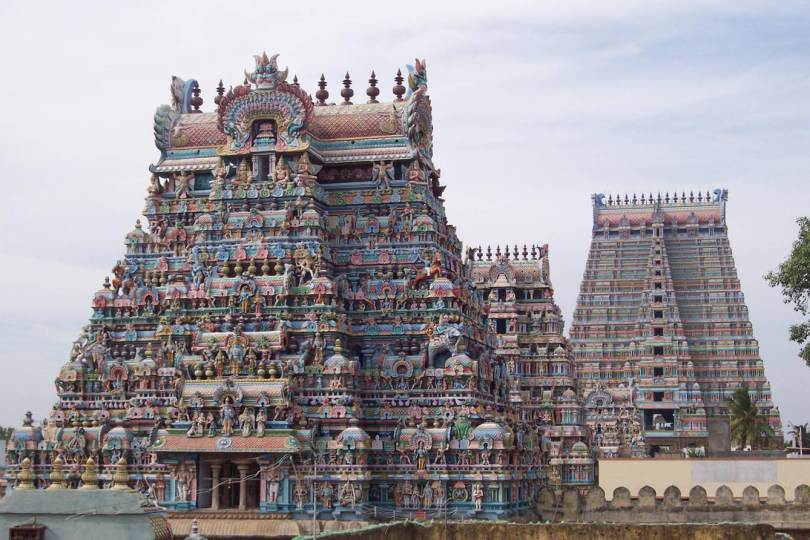
Sri Ranganathaswamy Temple, Srirangam. Can our IITs and Harvards and MITs create such temples?


3. LANGUAGE AND UNDERSTANDING.

Language influences world views!

Does language influence our perspective?


It seems it does. 


Sample these quotations from Ludwig Wittgenstein, the Austrian-English philosopher (1889-1951) who studied the relationship among language, thought and world. 


The limits of my language means the limits of my world.

Like everything metaphysical the harmony between thought and reality is to be found in the grammar of the language.

Language is a part of our organism and no less complicated than it.


 The world is my world: this is manifest in the fact that the limits of language (of that language which alone I understand) mean the limits of my world. 

The limits of my language are the limits of my mind. All I know is what I have words for.

Language limits understanding


Reflection on  these gives rise to several thoughts. We know our expression is limited by our language. We know two people do not look at or regard or even understand the same thing in the same way. We know that the more learned people have not only a different but deeper understanding of the world. But what Wittgenstein is saying here is that not only our expression, but our very understanding is influenced by our language. This means that if we speak a different language, we would understand the world differently- ie perceive a different world!


The limits of my language means the limits of my world- this can also be taken to mean not only that the world I perceive is limited by how well I know my language , but also what that language is! 


We can realise this when we meet with two persons who have studied the same subject through different languages- like English and Tamil or Hindi, in India!


There are some simple situations. We in India consider that man has six senses- this is in all Indian languages. The animals have five. For instance, the ancient Tamil Classic Tholkappiam details how the different forms of life reflect different levels of senses:


There are those with only one sense- the sense of touch.(grass, tree)

There are those with two senses- the sense of touch and taste ( indicated by tongue) ( snail)

There are those with three- the above two plus smell- indicated by the nose. (ant, leech)

There are those with four- the above three plus sight- indicated by eyes.( crab)

There are those with five- the above four, with hearing, indicated by ears. ( four-legged animals, fish, tortoise, crocodile)


There are those with six- the above five, with 'manas'- which is different from what is called mind in English. (Man, and some animals with high intelligence like parrot, monkey, elephant.) These are examples give by Tholkappiar.

(Tholkappiam, Poruladhikaram, Marabial, Sutra: 571)

(We wonder what would have happened to Darwin and his theory of evolution had he known and understood this. As yet, his theory and its followers cannot account for consciousness.)


 If we go beyond mere grammar, and  into our philosophy and psychology, we will get to know buddhi, chitta and ahankara, beyond the manas. Together, these are called 'antahkarana'. This is so in all Indian languages.

t

 But for one learning through English alone, the sixth sense will convey something weird or extraordinary! Naturally, man considers himself only a higher animal in the Western tradition- eg. rational animal. And the psychology they have developed is on the basis of experiments with and on animals such as Pavlov's! ( or with abnormal individuals, like those of Freud!)#


Ivan Pavlov  who propounded the theory of classical conditioning based on the study of dogs!

 We in Indian languages have six seasons (Ritu) - while the English have four. We in India consider God as both masculine and feminine and even neuter. Our highest name for the Ultimate Absolute is Brahman- which is termed in our sacred books as "Tat" ie "It". This is unthinkable in English. Nowhere does the Bible or Quran in any language would dare to call God 'Mother'!  So, some Christian  sects have invented a 'mother of God'!


Mother Kamakshi from Shiroda, Goa.

Language alters understanding


Thus we see that our language fixes the natural contours of what and how we know and understand the world.

Above all, we in India consider that the whole of creation is endowed with consciousness, though it is not expressed or manifest  to the same degree in all. Even the stone is conscious, but it is involuted! It is the Indian belief that life takes birth in 84 lakh  (8.4 million) forms, from stone onwards. Manikkavachaka details how this happens, in his Tiruvachakam: (Sivapuranam)

புல்லாகிப் பூடாய்ப் புழுவாய் மரமாகிப் 
பல் விருகமாகிப் பறவையாய்ப் பாம்பாகிக் 
கல்லாய் மனிதராய்ப் பேயாய்க் கணங்களாய் 
வல் அசுரர் ஆகி முனிவராய்த் தேவராய்ச் 
செல்லாஅ நின்ற இத் தாவர சங்கமத்துள் 30 

எல்லாப் பிறப்பும் பிறந்து இளைத்தேன், எம்பெருமான் 
மெய்யே உன் பொன் அடிகள் கண்டு இன்று வீடு உற்றேன் 


He has not enumerated them in the same order but he mentions all: stone, grass, plants, trees,worms, snake,birds, animals of all types, men, devas and demons, munis and ghosts, - all types of moving and stationary forms. He complains to the Lord that he is tired of all this, and today, by beholding God's  golden feet, he has attained Liberation!


If we reflect properly, this has tremendous implications. No one who is brought up in the true Indian tradition can feel alienated from any form of life. Nature represents and presents a Unity, an overarching harmony above all conflicts and contradictions. What some mystic traditions recognise as the 'Great Chain of Being' is not so mystical and quite open to the cultivated Indian consciousness. Modern Tamil poet Subramania  Bharati gave expression to this sentiment in his song, the crow and the sparrow belong to my caste, the wide ocean and the mountain belong to my clan, etc. (Our traditional sculptors- the Stapathis- can not only sense the presence of 'life' in stone, they can also sense whether the stone is male or female, so that the appropriate stone is used for sculpting the vigraha!)


Yali, sculpted recently at the temple at Orikkai, in Tamil Nad.
Taken from: rajan-traveltime.blogspot.in. Thanks.
That man is meant to lord over the entire creation, that the world is created for man's enjoyment, etc as the Biblical teaching is interpreted, ( on which the entire Western civilisation is based , along with its economic imperialism) is what is alien to the Indian consciousness! We can at once see how the language of common education today in the Indian academic system viz, English is totally changing the more fundamental Indian perspective of life itself!

Neglect of Indian insights, along with the languages!

There is therefore deep sense when some thoughtful people plead for education through and study of Indian languages. But this is mainly converted into slogans, and used by politicians to harass the linguistic minorities. And these persons themselves are not clear why they plead for Indian languages, except from a sense of local pride. They are not aware of the deeper connections between language and world perspective. Resultantly, they use the local language to teach Western ideas and perspectives- even when they are harmful to our interests. We have no choice today but to learn science and modern subjects through English, but over 95% of Indian literature in all languages is about the basic questions of life, This is what is ultimately neglected by us by our modern education. We learn to earn a living, and fail to learn to live.

# NOTE:

Indian tradition too in all languages has drawn inspiration from the natural and animal worlds, but not by experimenting with them. It is by meditating on them (knowledge by identity which the Westerner will never understand) but even by deep observation. Most of us know the example given in the Gita and Tirukkural of the tortoise: how it draws in its legs and head on sensing danger and how likewise, man should control his five senses. In the Bhagavatam, we get the example of the Avadhuta who learnt from the birds and animals, by his "keen sense". He learnt from 24 forms, all of which he accepted as his 'guru'- for they transformed his consciousness: "the earth, the air, the sky, water, fire, the moon and the sun, the dove, the boa-constrictor, the sea, the moth, the honey-bee, the elephant, the honey-gatherer, the deer, the fish, Pingala (a courtesan), the osprey, the infant, the maiden, the forger of arrows,the serpent, the spider, and the Bhringa (a kind of wasp)". (Bhagavata Mahapurana, Special edition, Gita Press, 2005, Vol.II, p.584).

This is what a man should learn from Nature:

Earth: teaches us to remain unperturbed even under oppression (infinite patience)

Mountain and tree: ( modifications of earth): teach us to be altruistic in all our actions- to live for others.

Life-breath ( form of air): teaches us to be satisfied with mere sustenance (it exists by itself).The air teaches man to be free-moving, not to get attached to anything!

The Sky: Teaches us that the Self is Unlimited and Uncicumscribed. It is not affected by any of the elements (gunas) of nature.

Water: teaches us to be holy and unpolluted.

Fire:  teaches us to be unpolluted, as the fire purifies everything.

Moon: by its waxing and waning, teaches that only our body is affected by changes; our Atman ever remains as it is. (The changes in the moon are of its digits, not the moon itself!) It teaches that our body is subject to the influence of Time.

Fire: teaches how inscrutable Time absorbs everything.

Sun: teaches us that our faculties are for the benefit of others, just like the Sun absorbs water and brings forth rain!
And like the one Sun reflected in different pans of water, man should realise that it is One Atman, but gross minded people take it as many!

Dove: by observing a dove-couple, the Avadhuta understood how attachment led to entanglement and ruin.


From: ISKCON sources. Grateful thanks.

Python: teaches man to be satisfied  with what comes to him of its own, and not to run after things.

Sea: teaches man to be still and calm, deep and profound.

Moth; teaches man not to fall to his ruin led by external attractions.

Honey-bee: teaches man to be satisfied with small quantities of food at a time. The ascetic should never accumulate anything for the morrow- for then, he will invite ruin, like the honey is taken away,and the bee is killed.

Elephant: the wild elephant is captured with the help of the female elephant. So, the ascetic should avoid the company of women.

The honey-gatherer: teaches us not to be miserly, neither enjoying the wealth ourselves, nor helping others! 

The deer: is captured by its love of music. An ascetic should not listen to vulgar music.

The fish: teaches us not to become slaves of our tongue (taste) for that is how the fish courts its ruin.

Pingala, the courtesan: makes us realise that it is only the love of God that is permanent and real.

Like this, the Avadhuta draws lessons from everything he observes in Nature. (For a full account, see Srimad Bhagavata, Translated by Sw.Tapasyananda, vol.4. Sri Ramakrishna Math, Chennai,)


Will the Pavlovs of the West ever understand these things?
Such wisdom comes only through Indian languages. Our languages impart us not only greater sense, but deeper sensitivity. We experience the world differently.